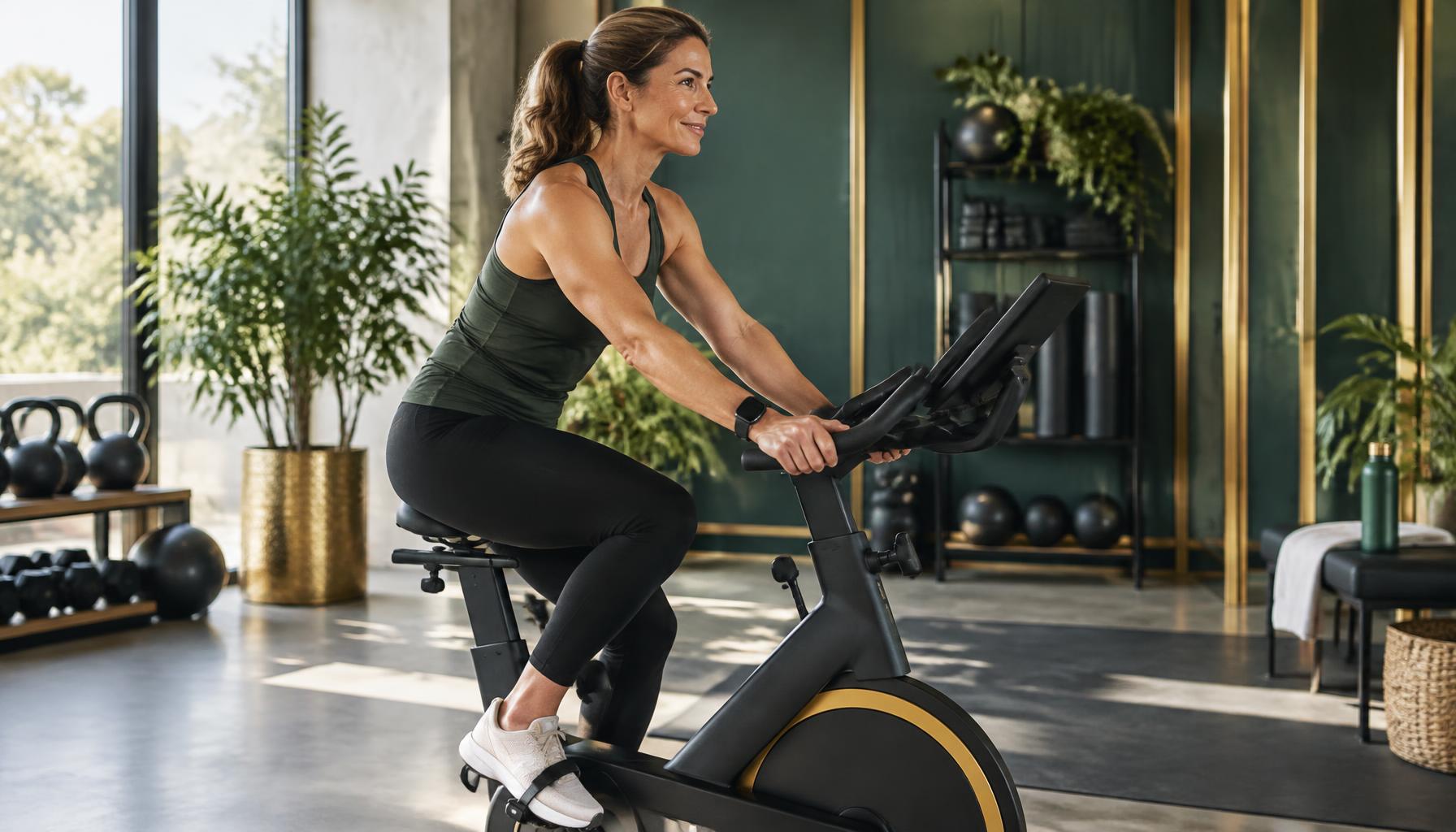
Zone 2 training is steady, conversational-pace cardio done at roughly 60-70% of max heart rate, low enough that you can talk in full sentences but not so easy that it feels like a stroll. It's built a reputation as the secret to building an "aerobic base," growing mitochondria, and improving how efficiently your body burns fat. Some of that is real. But a 2025 narrative review in Sports Medicine, "Much Ado About Zone 2," checked the evidence directly and found something more nuanced than the trend suggests: most of the data behind zone 2's mitochondrial claims comes from elite endurance athletes, not everyday exercisers, and in untrained populations, higher-intensity exercise tends to produce equal or greater fitness gains for the same time invested. Zone 2 still has a place. It's just not the only place.
Why is everyone suddenly talking about zone 2?
Zone 2 training moved from exercise physiology labs into mainstream fitness conversation over the past few years, largely through longevity-focused doctors and podcasters describing it as the foundation of cardiovascular and metabolic health. The pitch is appealing: low-impact, sustainable, not exhausting, and tied to real physiology — mitochondrial biogenesis, improved fat oxidation, and a stronger aerobic base that supposedly makes every other kind of exercise easier.
None of that is made up. The question worth asking, especially if you're deciding how to spend limited exercise time each week, is whether zone 2 delivers those benefits better than the alternatives, or just differently.
How do you actually define zone 2?
There's no single official definition, which is part of why the conversation gets muddled. The most common ways people identify it:
Heart rate. Roughly 60-70% of estimated max heart rate, though this varies by individual fitness and is a rough guide at best, not a precise physiological marker.
Lactate threshold. In exercise physiology, zone 2 sits below the first lactate threshold (LT1), around 1.5-2.0 mmol/L blood lactate for many endurance-trained people — the point where the body is still clearing lactate about as fast as it's produced.
The talk test. The simplest field method: you should be able to speak in full sentences without gasping for breath between them. If you can comfortably hold a conversation, you're likely in or near zone 2. If you can only get out a few words at a time, you've drifted into zone 3 or above.
For most people without access to lab-based lactate testing, the talk test combined with a rough heart rate range is a reasonable starting point.
What is zone 2 actually supposed to do?
The claimed adaptations, and they're not fabricated, include mitochondrial biogenesis (an increase in the number and function of the mitochondria inside muscle cells), improved fat oxidation (training the body to rely more on fat for fuel at a given intensity, sparing glycogen), and better lactate clearance, which theoretically makes harder efforts feel more sustainable over time. These adaptations are well documented in elite endurance athletes, who typically build 70-80% of their training volume at these lower intensities.
The open question is how much of that translates to someone who isn't training like a competitive endurance athlete.
What did the 2025 review actually find?
A 2025 narrative review published in Sports Medicine, led by researchers including exercise physiologist Martin Gibala, set out specifically to check whether the popular framing of zone 2 holds up against the underlying research, particularly for the general population rather than elite athletes.
Two findings stand out. First, on mitochondrial capacity: the review concluded that current evidence does not support zone 2 as the optimal intensity for improving mitochondrial or fatty acid oxidative capacity. Zone 2 exercise does activate some of the relevant cellular signaling pathways, but the evidence across studies is mixed, and higher-intensity exercise tends to produce greater mitochondrial adaptations for an equivalent amount of training time.
Second, on general cardiorespiratory fitness: when zone 2 and higher intensities were compared head-to-head in untrained or recreationally active people, improvements in fitness were either similar or better with higher intensities. The authors were direct about the practical implication, writing that prioritizing higher exercise intensities is important for people trying to meet general activity and health guidelines, and cautioning against advising the public to avoid harder efforts in favor of exclusively low-intensity work.
The review also flagged the core problem with a lot of the popular zone 2 messaging: most of the supporting research comes from elite athletes who already do enormous training volumes, combining large amounts of low-intensity work with smaller amounts of very high-intensity work. What zone 2 looks like, and what it accomplishes, in that context is not automatically the same as what it looks like for someone doing three 30-minute sessions a week.
So should you stop doing zone 2?
No — and that's not what the review concluded either. This isn't a case of one intensity being right and the other being wrong.
Zone 2's real advantages are practical, not purely physiological: it's low-impact, it's repeatable day after day without the recovery cost of hard intervals, it's a reasonable entry point for someone who isn't currently exercising at all, and it's genuinely enjoyable for a lot of people in a way that repeated high-intensity efforts aren't. Those are legitimate reasons to include it in a training week. It's a different thing from the specific claim that zone 2 is uniquely responsible for building mitochondria or aerobic capacity better than harder training would.
The more evidence-consistent framing: for general health and fitness, intensity variety appears to matter more than any single zone being "the" answer. A mix that includes some easier, sustainable aerobic work and some genuinely hard effort each week is better supported than an all-zone-2 or all-high-intensity approach.
How does this connect to perimenopause and menopause specifically?
This matters for the population we work with most, because a lot of the "cardio is a waste of time, just walk" and "never do zone 2, always go hard" advice aimed at women in midlife oversimplifies both sides. We've written before about what VO2 max actually measures and why cardio intensity matters in perimenopause — the short version is that cardiorespiratory fitness is one of the strongest predictors of long-term health outcomes at this life stage, and how you build it matters less than whether you build it consistently.
Zone 2 sessions are a sustainable way to accumulate aerobic volume on days when joints, sleep, or recovery capacity don't support something harder. They're not a substitute for the higher-intensity work that the current evidence says drives more of the fitness adaptation. The two are complementary, not competing.
What does a sensible weekly mix actually look like?
There's no universal prescription, and what fits depends on current fitness, joint history, and how much total training time is realistic. A reasonable starting framework for someone newer to structured cardio: most weekly aerobic minutes at a conversational, zone 2-type pace, with one to two sessions per week that are genuinely hard, hard enough that holding a conversation isn't possible. The zone 2 volume builds a base and provides low-cost, repeatable movement. The harder sessions are where a meaningful share of the fitness adaptation appears to come from, based on the current evidence.
Strength training sits alongside both of these, not in competition with them, particularly for anyone managing the muscle and bone changes that come with perimenopause and menopause.
Our genomic and lab testing, Genomic Menopausal Reset, and medically supervised weight loss program can add individualized context when exercise, recovery, and metabolic goals overlap.
Frequently asked questions
Is zone 2 training a waste of time?
No. The review didn't find that zone 2 is ineffective, it found that it's not uniquely superior to higher intensities for the specific outcomes (mitochondrial capacity, cardiorespiratory fitness) it's often credited with. It still has real, practical value as sustainable, low-impact aerobic volume.
How do I find my zone 2 without lab testing?
The talk test is the most accessible method: you should be able to speak in full sentences without gasping. A heart rate of roughly 60-70% of estimated max is a reasonable secondary check, understanding that formulas for max heart rate are estimates, not precise measurements.
Do I need a heart rate monitor to do this correctly?
It helps but isn't required. The talk test alone is a reasonable field method for most people who aren't training for elite endurance performance.
Should women in perimenopause avoid high-intensity exercise?
No. The evidence reviewed here doesn't support avoiding harder efforts. A mix of both intensities is better supported than relying on either one exclusively.
Want help building a cardio and strength plan that fits your actual life?
If you're not sure how to structure your training week, or you've been doing all one intensity and wondering if that's the right call, book a free discovery call. We'll look at your current activity, recovery, and goals, and build a plan around what the evidence actually supports.
This article is general health education and is not medical advice, a diagnosis, or a treatment recommendation for any individual. It does not create a clinician-patient relationship. Vitality Dartmouth is an RN-led clinic; all prescriptions and diagnostic orders are written by a collaborating nurse practitioner or physician. Individual results vary, and no outcome is promised or guaranteed. Talk with your own licensed healthcare provider before beginning or changing an exercise program, especially if you have a cardiovascular condition. Call 911 for a medical emergency.
Sources
- Storoschuk, K.L., Moran-MacDonald, A., Gibala, M.J., & Gurd, B.J. Much Ado About Zone 2: A Narrative Review Assessing the Efficacy of Zone 2 Training for Improving Mitochondrial Capacity and Cardiorespiratory Fitness in the General Population. Sports Medicine, 2025. doi.org
- TrainingPeaks. Zone 2 Training: Why It Works and How To Do It Right. trainingpeaks.com