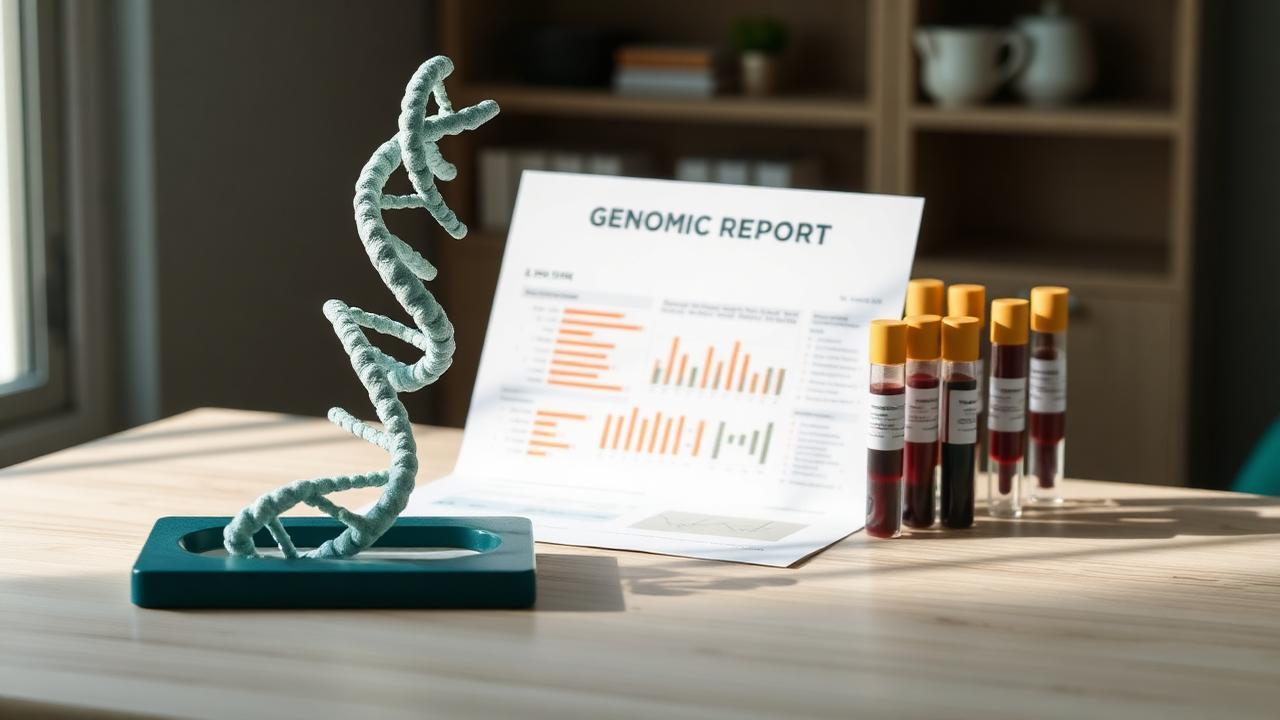
Biological-age panels, DNA diet kits, and “longevity biomarker” tests are everywhere in 2026. They are one of the year’s biggest wellness trends, and patients walk into our Dartmouth clinic asking about them every week. Some of that enthusiasm is deserved. Some of it is marketing. As a registered nurse who uses genomic and lab biomarker testing daily to build patient programs, I want to give you an honest map: what a DNA test can genuinely tell you, what it cannot, and how testing changes a health plan when a licensed clinician, rather than an app, is the one reading the results.
Quick answer
Genomic (DNA) testing analyzes gene variants that influence how your body tends to handle nutrients, caffeine, exercise recovery, hormones, and metabolic risk: tendencies that stay stable for life. Lab biomarker testing (blood work such as A1C, lipids, thyroid, vitamin D, and inflammatory markers) shows what is actually happening in your body right now. Neither one is a diagnosis or a crystal ball. DNA describes predisposition, not destiny, and single results always need clinical context. The real value comes from combining the two, using genetics to understand your baseline tendencies and repeated lab work to measure whether your plan is working, under the supervision of a licensed clinician. At Vitality Dartmouth, an RN-led functional wellness clinic serving Dartmouth and the SouthCoast of Massachusetts, Justin Coelho, RN, BSN pairs genomic and lab biomarker testing to personalize nutrition, weight-loss, menopause, and recovery programs, with results reviewed one-on-one rather than delivered by algorithm.
What is genomic testing, and how is it different from regular blood work?
The two tests answer different questions, and confusing them is the most common mistake we see.
A genomic (DNA) test is a one-time snapshot of your genetic code, usually from a cheek swab or saliva sample. It looks at specific gene variants (called SNPs, or single-nucleotide polymorphisms) associated with how people tend to metabolize caffeine, process certain B vitamins, respond to different macronutrient balances, clear estrogen, recover from training, and carry risk for common metabolic patterns. Your DNA does not change, so this test is done once.
Lab biomarker testing is the opposite: it is a moving picture. Blood markers like fasting glucose, A1C, a full lipid panel, thyroid function, vitamin D, ferritin, and inflammatory markers such as hs-CRP tell you what your body is doing this month, and because they change with behavior, they are how you measure progress. In our practice, labs are drawn at baseline and re-checked at defined intervals, because a plan you can’t measure is a plan you’re guessing at.
Think of it this way: your genome is the hand you were dealt; your labs are how you’re playing it.
What can a DNA test actually tell you?
Quite a lot, as long as you hold it correctly. The strongest, most practical use of genomic data today is in nutrition and lifestyle personalization, and the honest framing is “tendencies, not verdicts.”
There is real science here. The PREDICT study, published in Nature Medicine, measured how more than 1,000 people responded to identical meals and found large person-to-person differences in blood sugar and blood fat responses, differences driven by a mix of genetics, gut microbiome, sleep, and meal timing (Berry et al., 2020, PubMed). The European Food4Me randomized controlled trial found that people receiving personalized nutrition advice improved their eating patterns more than those given standard population-level guidelines (Celis-Morales et al., International Journal of Epidemiology, with the study design on PubMed). Personalization works. The open scientific question is exactly how much of the personalization signal comes from genes versus everything else, which is precisely why genetic data should be one input among several, not the whole plan.
In practice, genomic results help us set smarter starting points: how aggressively to adjust caffeine in a patient with poor sleep, whether a patient may do better tilting protein and fat versus carbohydrate ratios, which micronutrients deserve early lab surveillance, and how much recovery time to build into a training block. Every one of those starting points then gets tested against real lab work and real-world results.
What can’t genomic testing tell you? (The honest part)
This section matters more than any other, because the 2026 wave of direct-to-consumer DNA products often oversells.
A wellness genomic panel cannot diagnose disease. It cannot tell you that you will develop diabetes, dementia, or heart disease, only that certain variants are associated, at the population level, with shifted odds. It cannot replace medical screening: a DNA report suggesting “normal” lipid-related genetics does not mean you can skip a cholesterol panel. And a consumer report’s “you may be prone to X” line, without clinical context, can create either false alarm or false reassurance, both of which are harmful. The National Library of Medicine maintains a plain-language guide to the limits of direct-to-consumer genetic testing that we recommend to every patient (MedlinePlus, NIH).
Genetics also cannot predict exactly how you will respond to a specific medication or program. We are equally direct about this in our weight-loss practice: genomic data helps us build a smarter plan, but it does not tell us in advance precisely how your body will respond to a GLP-1 medication or any other therapy. Anyone who claims otherwise is ahead of the science.
That is why the clinician matters. A report is data; a program is judgment. When testing is reviewed by a licensed professional who also has your history, your labs, and your goals in front of them, the same data becomes far more useful, and far safer.
How do DNA and lab testing work together in a real program?
Here is what the combination looks like at an RN-led clinic, using the process we run at Vitality Dartmouth.
First, baseline: a full health history, a genomic panel (once), and baseline blood work. Screening comes before any program recommendation. Supervision is not a tagline; it is the sequence.
Second, interpretation: results are reviewed with you, one-on-one, by Justin Coelho, RN, BSN. The genomic report is translated into plain English and cross-checked against your actual labs. A genetic tendency toward, say, lower vitamin D status only matters alongside your measured vitamin D level, your sun exposure, and your diet.
Third, the program: nutrition targets, training and recovery structure, and, where clinically appropriate, medically supervised therapies are built around both data sets. Our medically supervised weight-loss and peptide programs follow this same testing-first philosophy, as does our look at retatrutide’s Phase 3 results, and our Genomic Menopause Reset applies it to perimenopause and menopause care, where genetics around hormone metabolism can help make sense of symptoms that standard one-size-fits-all advice ignores.
Fourth, and this is the step consumer kits skip, re-measurement. Labs are repeated at defined intervals, the plan is adjusted, and decisions are made from your trend line, not a single number. This is also the sober answer to the biological-age trend: aging is best tracked through validated blood biomarkers and function over time, not a single dramatic “body age” score.
Is genomic testing worth it for people in Dartmouth and the SouthCoast?
If you are in Dartmouth, New Bedford, Westport, Fairhaven, or Fall River, you have plenty of mail-order DNA options, so the fair question is why do this locally.
What’s different about doing this at a local clinic? A mail-order kit emails you a PDF. At Vitality Dartmouth, testing comes with a licensed clinician who reviews your results with you in person, orders and interprets follow-up labs, and adjusts your program over months: the part that actually changes outcomes. When something in your labs warrants a physician’s attention, we say so and help you route it to your PCP.
Do I need to be an athlete or a biohacker for this to be useful? No. Most of our testing patients are everyday adults on the SouthCoast dealing with stubborn weight, low energy, perimenopause symptoms, or slow recovery, who want their plan built on data instead of guesswork.
Does insurance cover it? Wellness-focused genomic panels are typically self-pay, and some lab work may be billable depending on your coverage; we walk through costs transparently at your consultation before anything is ordered.
Where do I start? Start with a conversation, not a kit. Book a consultation at Vitality Dartmouth. We’ll review your history and goals, decide together whether genomic testing, lab work, or both make sense for you, and build a plan you can actually measure. No pressure, no algorithm: a clinician and your data, at a table in Dartmouth.
This article is for educational purposes only and is not medical advice, and it does not create a provider–patient relationship. Genomic and lab test results describe tendencies and current physiology, not diagnoses; individual results and responses vary, and no outcome is guaranteed. Wellness genomic panels are not a substitute for physician-ordered medical screening or care. Always consult a qualified healthcare professional before starting, stopping, or changing any treatment, supplement, or health program.