Most women are told to think about bone density at 65. The data says the window that matters opens roughly two decades earlier. In the Study of Women's Health Across the Nation (SWAN), a large multiethnic cohort followed for years, accelerated bone loss began about one year before the final menstrual period and continued for roughly three years afterward. During that phase, bone mineral density fell on average about 2% per year, with steeper declines at the spine than the hip, adding up to roughly 10% over a decade. That loss happens quietly. There is no symptom, no ache, and no line on a standard blood panel that flags it. Meanwhile, the U.S. Preventive Services Task Force recommends routine bone density screening starting at 65 for most women — which means for many, the fastest-loss years come and go entirely unmeasured. Understanding that timing is not a reason to panic. It is a reason to know where you stand while you still have room to act.
Why does bone loss accelerate during perimenopause and not after?
Bone is not inert scaffolding. It is living tissue in constant turnover — osteoclasts break down old bone, osteoblasts build new bone, and for most of adult life the two stay roughly matched. Estrogen is one of the main brakes on the breakdown side of that equation. As estrogen production becomes erratic and then declines through the menopause transition, that brake eases off. Resorption outpaces formation, and net bone density starts to fall.
The critical detail is the timing. Many people assume bone loss is a postmenopausal problem — something that belongs to your seventies. SWAN's longitudinal data tells a different story. The SWAN bone health findings describe a period of fast loss beginning roughly a year before the final menstrual period and persisting about three years, after which losses continue at a slower pace. The underlying analysis was published in the Journal of Bone and Mineral Research as "Bone mineral density loss in relation to the final menstrual period in a multiethnic cohort".
That means the steepest part of the curve overlaps precisely with the years when many women are told their symptoms are stress, or aging, or nothing to worry about — the same years when cycles get unpredictable, sleep fragments, and body composition starts to shift in ways that don't track with effort. Bone is doing something during that stretch, and almost nobody is looking.
What actually gets measured, and what does not?
Here is where a lot of confusion lives, so let's be precise about it.
A standard blood panel does not measure bone density. Calcium on a routine metabolic panel is telling you about calcium in the blood, which the body defends tightly — often by pulling from bone. A normal serum calcium is entirely compatible with ongoing bone loss. It is not reassurance.
Bone mineral density is measured by DXA (dual-energy X-ray absorptiometry), a low-dose imaging scan of the hip and spine that produces a T-score. That is an imaging study, ordered by a provider, not something a lab panel produces.
Bloodwork can still contribute context. Vitamin D status, thyroid function, and other markers are part of how a provider builds a picture of bone health risk. They are inputs, not verdicts, and they do not substitute for density imaging.
The honest framing is that these are different tools answering different questions. A lab panel can tell you about factors that influence bone. Only DXA tells you the density itself.
When is a bone density scan actually recommended?
The current USPSTF recommendation on osteoporosis screening, updated in January 2025, is the clearest reference point:
- Women 65 and older: screen for osteoporosis to prevent osteoporotic fractures. Grade B.
- Postmenopausal women under 65: screen those at increased risk for osteoporotic fracture, identified by clinical risk assessment. Grade B.
- Men: current evidence is insufficient to weigh benefits and harms. Grade I statement.
That second bullet is the one that gets skipped in conversation, and it is the one that matters most to a 48-year-old. The task force does not say "wait until 65." It says that under 65, screening depends on a risk assessment — which somebody has to actually perform. Risk factors that feed those assessments commonly include low body weight, prior adult fracture, parental hip fracture, smoking, heavier alcohol use, long-term glucocorticoid use, rheumatoid arthritis, and early menopause.
If nobody has walked through that list with you, the question of whether you qualify has not been answered. It has just gone unasked.
A note on the SWAN weight finding, because it cuts against intuition: in that cohort, women with obesity had higher measured bone density than women without — and still had as many fractures. Compared with non-obese women at similar density, they had significantly more. A higher number on a scan is not the whole story about bone strength.
Can anything actually slow bone loss during the transition?
This is where I'll be careful, because bone is a topic where the internet oversells badly.
Nothing reverses the hormonal shift of menopause, and no program — ours included — treats, cures, or prevents osteoporosis. What the evidence does support is that certain inputs are associated with better bone outcomes, and that they are worth getting right during the years when the curve is steepest.
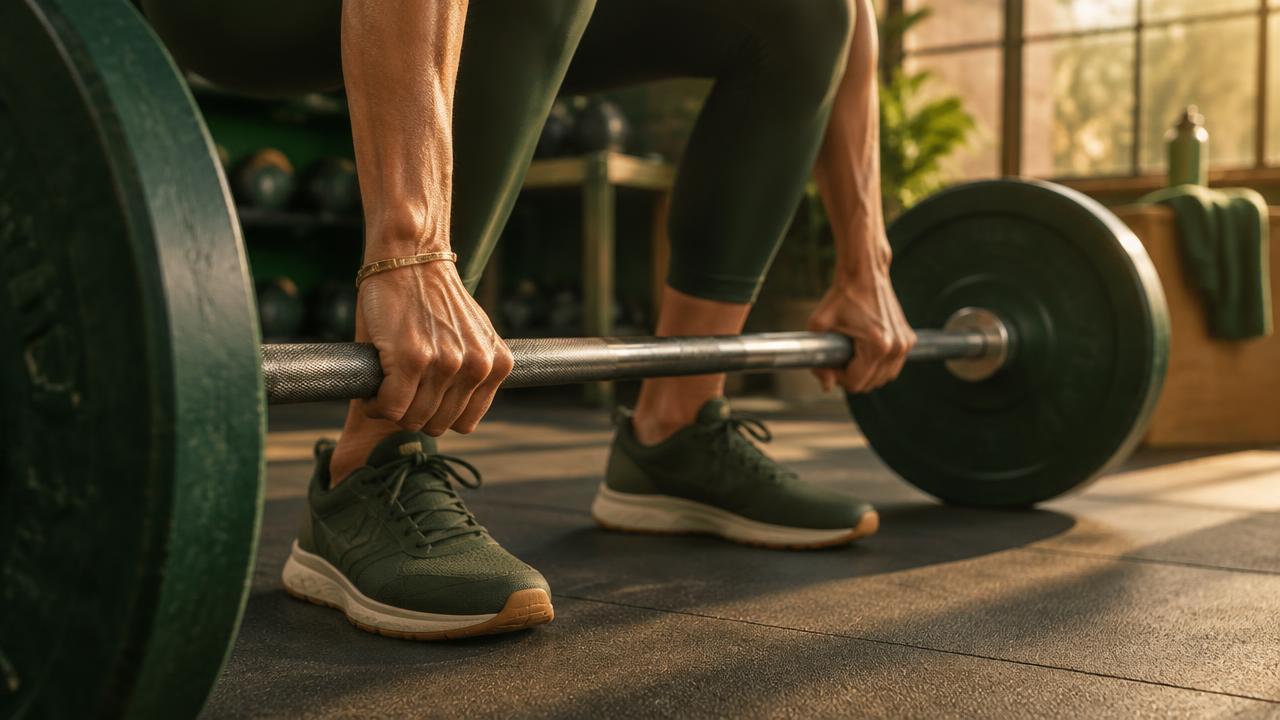
Mechanical loading. Bone adapts to the forces placed on it. Progressive resistance training and impact loading are the interventions with the most consistent signal in the bone literature. Walking is genuinely good for you and is not, by itself, a meaningful osteogenic stimulus for the hip and spine. Load is the variable.
Adequate protein and total calories. Chronic underfeeding during a period of already-accelerated loss is a bad combination. This is also why nutrition sequencing matters so much during any structured weight loss phase.
Calcium and vitamin D sufficiency. Sufficiency, not megadosing. More is not better, and status is measurable rather than guessable — particularly in New England, where sun exposure is limited for a good chunk of the year.
Not smoking, and moderating alcohol. Both appear repeatedly in fracture risk models for a reason.
Hormone therapy is a legitimate part of this conversation for some women and not for others. Whether it is appropriate is a decision for a prescribing provider based on your history, timing, and risk profile — not something to decide from a blog post. Similarly, some of what circulates online about peptides and bone is category-level education about compounds that are prescribed off-label or remain investigational. Regulatory status varies by compound and is genuinely in motion. Any of it, if it applies to you at all, belongs in a supervised conversation with a chart open.
How does this fit with weight loss, if I'm working on that too?
It fits directly, and it is a reason to do weight loss carefully rather than fast.
Any substantial weight loss — by any method, including medically supervised weight loss medication — reduces mechanical load on the skeleton and typically involves eating less. Both of those are relevant to bone. That is not an argument against pursuing weight loss, which carries real health benefits for many people. It is an argument for structuring it so that resistance training and protein intake are part of the plan rather than afterthoughts, and for having someone tracking more than the scale number.
This is precisely why the medically supervised piece is not marketing language. A prescription with no training plan, no nutrition target, and no lab follow-up is a thinner version of care than what a body going through the menopause transition deserves.
What does this look like at a clinic in Dartmouth, MA?
Practically: it starts with a conversation about where you are in the transition, what your history actually contains, and what has and hasn't been measured.
At Vitality Dartmouth, I'm an RN and a CrossFit Level 2 coach. I build the program and coach the training. Our collaborating NP or MD prescribes and orders. That division matters here: if bone density imaging is indicated for you, it is ordered by a provider — ours or your PCP — and read in that context. What I can do is make sure the risk assessment actually gets done, that your lab and genomic testing is reviewed by a human being who explains what it means, and that the training side is programmed for load rather than for sweat.
For women in the thick of the transition, that work usually sits alongside the rest of the metabolic picture — which is what our menopause program is built around. Bone is rarely the only thing changing.
We see patients in person in Dartmouth, and most of the people who walk through the door are from right around here — New Bedford, Westport, Fairhaven, Fall River, and the surrounding SouthCoast towns. The New England angle is not incidental, either. Vitamin D status is one of the more common things worth checking in this region, and it is worth knowing your number before the winter rather than in March.
Frequently asked questions
I'm 47 and my doctor said we'd check bone density "later." Is that wrong?
Not necessarily. Under 65, the recommendation is risk-based, and many women genuinely do not have risk factors that warrant imaging yet. What's worth asking is whether a risk assessment was actually performed, or whether "later" was shorthand for "not on the standard schedule." Those are different answers.
Does a normal calcium level on my bloodwork mean my bones are fine?
No. Serum calcium is tightly regulated and does not reflect bone density. Density is measured by imaging, not by a routine panel.
Is walking enough?
Walking is worthwhile for cardiovascular and metabolic health. For bone specifically, the evidence points toward progressive resistance training and impact loading as the stimuli that matter most. Load is the active ingredient.
I already have osteopenia. Is it too late to do anything?
That is a conversation for the provider managing it, and it is very much not a reason to disengage. Training, nutrition, and risk-factor management remain relevant regardless of where a T-score sits.
Do you do DXA scans at the clinic?
Imaging is ordered and performed through a provider. What we do is make sure the question gets asked, the context gets reviewed, and the results get explained in plain language.
Where to start
If you are in perimenopause or early postmenopause on the SouthCoast and nobody has walked you through your bone risk, that is a gap worth closing — and it is a short conversation, not a big commitment.
Book a free discovery call. It's a conversation about your history, your goals, and what's actually been measured. No scan, no draw, no obligation — just a plan for what's worth looking at next.
You can read more of our education articles here.
This article is for educational purposes only. It is not medical advice, and it does not establish a clinician-patient relationship. Justin Coelho is a Registered Nurse and does not diagnose or prescribe; all prescriptions and diagnostic orders at Vitality Dartmouth are written by a collaborating NP or MD. Some therapies discussed in general terms are prescribed off-label or remain investigational, and regulatory status varies. Talk with your own healthcare provider about your individual situation before making any changes to your care.