Some of it holds up. Most of the specific product claims don't, at least not yet. A 2026 umbrella review pooling 30 systematic reviews and 225 primary studies found the Mediterranean diet has genuinely strong evidence (certainty ranging from high to low, depending on the marker) for lowering CRP, IL-6, and raising adiponectin. Vegetarian diets showed a weaker but real inverse association with CRP. Keto, low-glycemic, low-FODMAP, and Nordic diets simply don't have enough research yet to say either way. Meanwhile, a separate 2026 network meta-analysis of 60 randomized trials testing individual supplements (turmeric, green tea extract, probiotics, zinc, resveratrol, and others) found effects that are real but marker-specific, often built on small trials, and nowhere close to the sweeping "cures inflammation" claims attached to most of them in marketing.
Is "anti-inflammatory diet" even a real, evidence-backed category?
Yes, as a whole eating pattern, but the evidence is far stronger for some patterns than others, and the umbrella review makes that hierarchy explicit rather than treating "anti-inflammatory" as one interchangeable label. Of 15 different dietary patterns evaluated across those 30 systematic reviews, only two came out with meaningful supporting evidence: the Mediterranean diet and, to a lesser degree, vegetarian diets. The rest, including several patterns marketed heavily as anti-inflammatory (keto, low-FODMAP, Nordic, low-glycemic), didn't have enough consistent research behind them to draw a real conclusion, positive or negative.
What does the evidence actually say about the Mediterranean diet specifically?
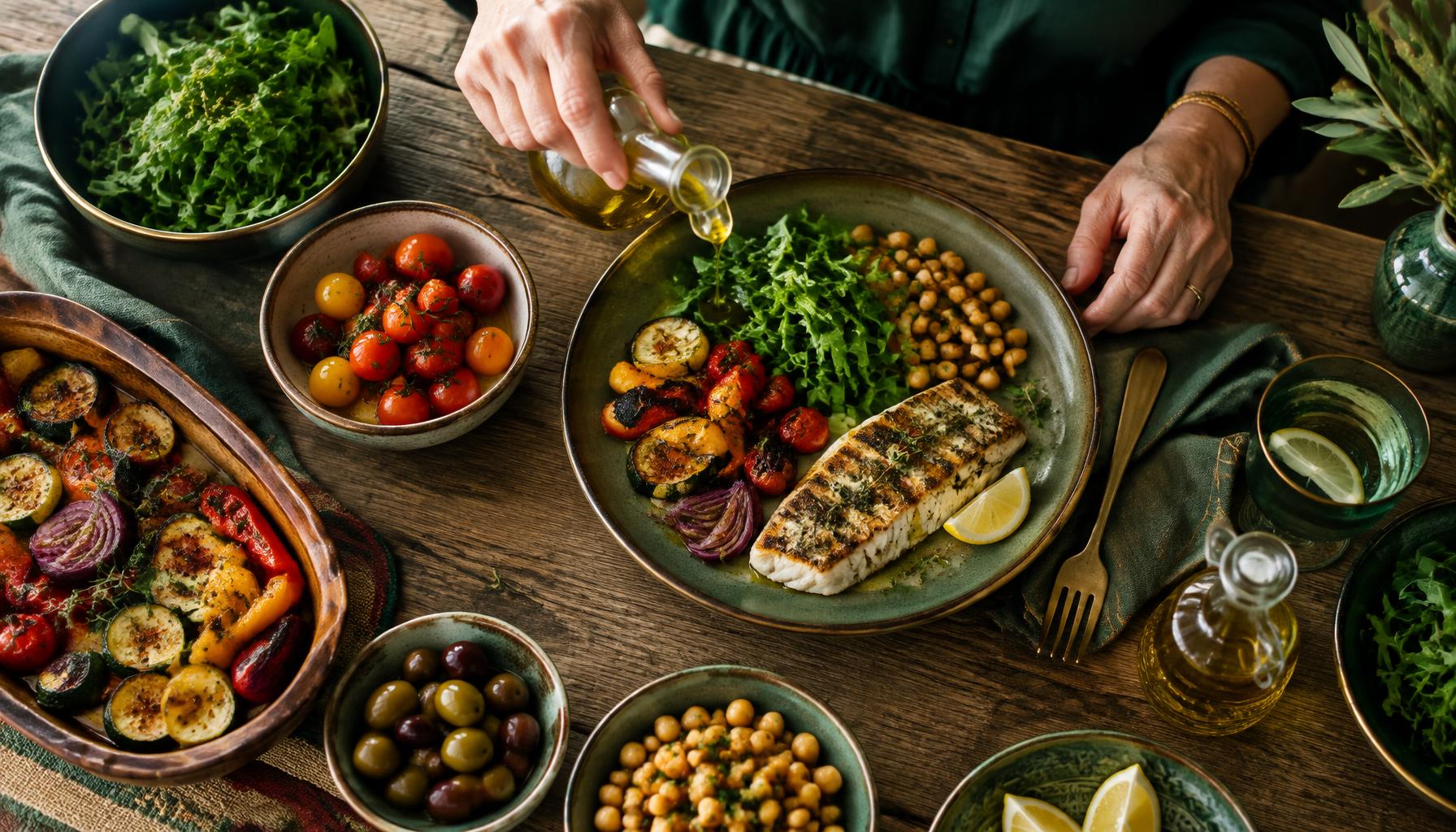
This is the pattern with the most support, and the review is specific about which markers it affects. Researchers found "significant effects and overall beneficial association between the Mediterranean diet and the levels of inflammatory markers C-reactive protein (CRP), interleukin-6, and adiponectin," with certainty of evidence ranging from high to low depending on which marker and which specific meta-analysis. That's a real, evidence-backed effect, not a marketing claim. It's also worth being precise about what "Mediterranean diet" means in this research: high vegetable, fruit, legume, and olive oil intake, moderate fish, and low processed food and added sugar, not a specific branded product or supplement.
What about vegetarian diets?
Also real, but with a meaningfully weaker evidence base. The same review found "a significant inverse association...between a vegetarian diet and CRP levels," but rated the certainty of that evidence as low to very low. That doesn't mean the effect isn't real, it means the current body of research supporting it is thinner and less consistent than what backs the Mediterranean pattern, so it's reasonable to treat the finding as promising rather than settled.
What about keto, low-glycemic, or "anti-inflammatory superfood" diets specifically marketed for inflammation?
This is where the gap between marketing and evidence is widest. The umbrella review found findings for most other dietary patterns, including several commonly marketed specifically for inflammation, "inconclusive or limited due to the paucity of studies." That's not the same as evidence that they don't work. It means there isn't yet a solid enough body of research to say either way, which is a meaningfully different claim than what a lot of product marketing implies.
Do specific anti-inflammatory supplements (turmeric, green tea extract, probiotics) actually move inflammatory markers?
Some do, for specific markers, in ways that are real but a lot narrower than the marketing suggests. A separate 2026 network meta-analysis in Nutrients, pooling 60 randomized controlled trials across 14 supplementation strategies in adults with overweight or obesity, found effects that vary considerably depending on which inflammatory marker you're looking at.
For IL-6, green tea extract ranked highest with a real, statistically meaningful reduction, followed by curcumin (the active compound in turmeric). For CRP specifically, the combination of probiotics with omega-3 ranked highest, followed by synbiotics, zinc, and curcumin, while resveratrol ranked lowest of the supplements tested for this marker. For TNF-alpha, synbiotics ranked first, though that specific finding came from a single small trial (30 participants), which is a real limitation worth naming rather than glossing over.
So is turmeric/curcumin actually backed by evidence, or is that just a wellness trend?
It's a middle case, genuinely more evidence-backed than most trending "anti-inflammatory" supplements, but not the sweeping cure-all it's sometimes marketed as. Curcumin showed up as a reasonably strong performer across multiple markers in the 2026 network meta-analysis (IL-6 and CRP specifically), which is a real signal. The honest caveat is that supplement research in this space tends to involve smaller trials, shorter durations, and more variation in dose and formulation than the whole-diet research on the Mediterranean pattern, so the confidence level behind "curcumin helps with IL-6" is genuinely lower than the confidence behind "Mediterranean diet helps with CRP," even though both directions of effect are real.
Are there any specific findings that actually contradict common anti-inflammatory marketing claims?
Yes, and this is worth naming directly because it cuts against a common assumption. The 2026 supplement meta-analysis found no supplement tested significantly reduced leptin, and zinc specifically was associated with a significant increase in leptin, the opposite of what a lot of "zinc for inflammation and metabolism" marketing implies. That's a useful reminder that "anti-inflammatory" isn't one uniform effect across every hormone and marker a supplement might touch, and a product can move one marker favorably while doing nothing or even moving another marker the wrong way.
Why does the distinction between whole diets and individual supplements matter practically?
Because it changes where you'd actually expect a return on effort. The strongest, most consistent evidence in this research sits with whole dietary patterns, specifically Mediterranean-style eating, sustained over time. Individual supplements show real but narrower, marker-specific effects, often from smaller and shorter trials than the diet-pattern research. That doesn't mean supplements are worthless. It means treating a single supplement as a substitute for the overall pattern of what you eat is not what this evidence actually supports.
This connects to something we've written about before: why a single CRP or ESR number is a data point, not a diagnosis. The same logic applies here. A single supplement moving a single marker in a small trial is a data point, not proof of a broad anti-inflammatory transformation.
How does this connect to exercise, since we've covered that too?
We've also written about what the research actually shows for exercise and inflammation, and the pattern is similar: real effects exist, but they're specific, moderate in size, and don't scale infinitely with more volume or a bigger claim. Diet and exercise research on inflammation both reward the same kind of skepticism, look at what marker actually moved, how strong the evidence is, and whether the effect size matches the claim being made about it.
How does this fit into what we do at Vitality Dartmouth?
Practically, this means we don't recommend a specific supplement as an inflammation fix without being clear about how much evidence actually backs it, and for which marker specifically. When someone's labs show elevated inflammatory markers, the intervention with the strongest evidence behind it is usually a sustained dietary pattern change, not a single supplement purchase, though specific supplements can be a reasonable, evidence-informed addition once the bigger picture is addressed.
Does this look different on the SouthCoast?
The evidence is the same everywhere. What's different locally is whether anyone walks someone through which anti-inflammatory claims are actually backed by research and which are marketing ahead of the evidence, rather than either dismissing the whole category or accepting every product claim at face value.
We work with people across Dartmouth, New Bedford, Westport, Fairhaven, and Fall River who've bought into individual "anti-inflammatory" products without ever changing the overall pattern of what they eat, which the research suggests is backwards from where the strongest evidence actually points.
Frequently asked questions
Is the Mediterranean diet the single best anti-inflammatory diet?
Among the patterns with enough research to draw a real conclusion, yes, it has the strongest and most consistent evidence in this 2026 umbrella review. That's different from saying it's proven superior to every other pattern, including ones that simply haven't been studied enough yet to compare.
Should I stop taking turmeric or curcumin supplements based on this?
No, the evidence doesn't argue against curcumin, it showed a real, statistically meaningful effect on IL-6 and CRP in the 2026 network meta-analysis. The caution is against treating it as a substitute for dietary pattern changes or expecting effects beyond what the marker-specific data actually shows.
Does "anti-inflammatory" mean the same thing across all these markers?
No, and that's one of the clearest findings here. Effects on CRP, IL-6, TNF-alpha, leptin, and adiponectin don't move together. A supplement or diet can meaningfully affect one marker while doing nothing, or moving in an unhelpful direction, on another.
How would I know if a specific anti-inflammatory product claim is backed by real evidence?
Look for whether the claim specifies which inflammatory marker it affects, whether it's based on a systematic review or meta-analysis rather than a single small trial, and whether the effect size is stated rather than just described as "reduces inflammation." Vague, marker-unspecific claims are the biggest red flag in this space.
Want to know what's actually supported for your specific inflammatory picture?
If you've been buying anti-inflammatory products without a clear sense of what's actually backed by evidence for your specific labs, book a free discovery call. We'll go through your actual markers and build a plan around what the research genuinely supports.
This article is general health education and is not medical advice, a diagnosis, or a treatment recommendation for any individual. It does not create a clinician-patient relationship. Vitality Dartmouth is an RN-led clinic; all prescriptions and diagnostic orders are written by a collaborating nurse practitioner or physician. Individual results vary, and no outcome is promised or guaranteed. Talk with your own licensed healthcare provider before starting any new supplement, especially if you take other medications. Call 911 for a medical emergency.
Sources
- Dietary Patterns Associated With Anti-inflammatory Effects: An Umbrella Review of Systematic Reviews and Meta-analyses. Nutrition Reviews, Oxford Academic, 2026. academic.oup.com
- Effects of Nutritional Supplements on Inflammatory Biomarkers in Overweight and Obese Adults: A Systematic Review and Network Meta-Analysis of Randomized Controlled Trials. Nutrients, 2026. mdpi.com